


Why import from Japan — and how complex is it really?
Japan exports over 1.4 million used vehicles to more than 100 countries every year. The reasons are straightforward: low annual mileage (Japanese drivers average just 6,000–7,500 km per year), rigorous maintenance culture, complete service records, and — since 2025–2026 — a yen rate near 150–155 per USD that gives overseas buyers roughly 20–30% more purchasing power than just a few years ago.
That said, importing a car from Japan is not a simple online purchase. It involves at minimum four distinct stages: sourcing and bidding, Japanese export clearance, international shipping, and destination customs clearance. Each stage has its own documents, timelines, and costs. This guide walks you through all of them — so you know exactly what you're getting into before you commit.
The honest summary: The process takes 4–12 weeks total depending on your destination. There are roughly 8–12 documents involved across Japan-side and buyer-side. Ocean freight alone runs USD 800–3,000+. Import duties vary dramatically by country — from 0% in some markets to 60–90% in others. Read on for the specifics.
The full import process: week by week
Here is what the end-to-end process looks like from the day you decide on a vehicle to the day it arrives at your door.

The document checklist: Japan-side & buyer-side
There are two sets of documents: those your Japan-side exporter prepares, and those you (or your local customs broker) need to prepare at destination. Both sets must be complete before customs clearance can proceed.

Common mistake: Many first-time buyers don't prepare the buyer-side documents until the car arrives at port — then face daily storage fees while scrambling for paperwork. File everything with your customs broker before the vessel departure date, not after arrival.
RoRo vs container shipping: which should you choose?
There are two ways to ship a vehicle from Japan. The right choice depends on the car's value, condition, and your destination port's available services.

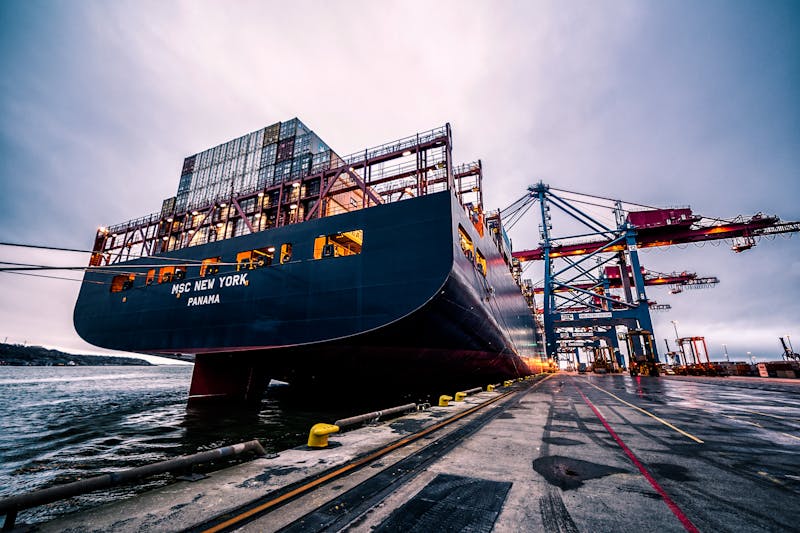
A 20ft container typically holds 2 standard cars; a 40ft holds 3–4. Consolidated container shipping (sharing a container with other buyers' vehicles) can bring per-car freight cost closer to RoRo pricing while still providing full protection — worth asking your exporter about if you're shipping a single high-value car.
ClickCar recommends containers for: Ferrari, Porsche, Lamborghini, and any vehicle with significant collector or resale value. For standard Toyota, Nissan, and Honda models, RoRo is the sensible default — it's faster to book and meaningfully cheaper.
What will you pay in customs duties?
Import duties vary dramatically by destination. Some countries charge a flat percentage of CIF value (Cost + Insurance + Freight); others apply age-based multipliers, emissions taxes, or consumption taxes on top. The table below shows approximate rates for major importing countries — verify current rates with a local customs broker before purchase.
| Country | Approx. duty rate | Age limit | Key notes |
|---|---|---|---|
| Australia | 5% + 10% GST | 25yr rule (RHD) | SEVS scheme for some newer models. NEVDIS check required. |
| United Arab Emirates | 5% CIF | No limit | GCC conformity required. No consumption tax currently. |
| United Kingdom | 6.5% + 20% VAT | No limit | DVSA Individual Vehicle Approval (IVA) for non-type-approved cars. |
| Malaysia | 30% + 10% excise | No strict limit | Approval from JPJ required. High duties but no absolute age bar. |
| Thailand | 80% CIF | No limit | Excise tax and VAT also apply on top of customs duty. |
| Kenya | 25% + 16% VAT + levies | 8 years max | KEBS pre-export verification (PVOC) required before shipping. |
| United States | 2.5% (cars) / 25% (trucks) | 25yr NHTSA rule | Under 25yr requires Registered Importer compliance — expensive. |
| New Zealand | 0% duty + 15% GST | No limit | NZ$ border levy applies. Biosecurity inspection mandatory. |
Don't underestimate the landed cost: Duty is calculated on CIF value — meaning the car's purchase price plus freight plus insurance combined, not just what you paid at auction. On a USD 20,000 car with USD 1,500 freight, a 30% duty rate applies to USD 21,500+, not USD 20,000.
Sample landed cost: Toyota Land Cruiser to UAE
To make this concrete, here is a realistic cost breakdown for a 2019 Toyota Land Cruiser 200 GX-R, auctioned at USD 25,000, shipped to Dubai by RoRo.
In this example, the total cost adds roughly 16% on top of the auction price. This ratio varies significantly by destination — in high-duty markets like Thailand or Malaysia, the premium can easily reach 100%+ of the vehicle's auction value.
The parts most buyers underestimate
Bidding against professionals
At Japanese auction houses, you have 60–90 seconds to decide on each vehicle. Professional dealers are bidding hundreds of cars per month. If you're relying on an inexperienced agent — or trying to participate directly — you'll either lose every desirable lot or overbid on problematic ones. Market knowledge and speed matter enormously.
Pre-shipment inspection requirements
Countries like Kenya, Tanzania, Nigeria, and Ghana require a government-appointed pre-shipment inspection before the car leaves Japan. These must be arranged in advance — if the inspection isn't done before the car is loaded, it cannot be cleared at destination. Many first-time importers miss this completely.
Destination port storage fees
Once a vessel arrives, destination ports charge daily storage fees — typically USD 25–80 per day depending on port. If your paperwork isn't ready, those fees accumulate fast. A two-week delay easily adds USD 350–1,100 in avoidable charges.
Compliance modifications
Japan drives on the left, so headlights are aimed left. In most markets this requires adjustment or replacement before registration. Some countries require speedometer overlay conversion (km → miles), emissions compliance modification, or daytime running light installation. Factor these in before you calculate total cost.
The case for using a specialist exporter: Each of the above complications — auction bidding, pre-shipment inspection coordination, document preparation, carrier booking, and export clearance — is handled by an experienced exporter as a matter of routine. First-time importers handling these independently face steep learning curves at every step, with real financial risk at each one.